

Marble Sweater
Couldn't load pickup availability
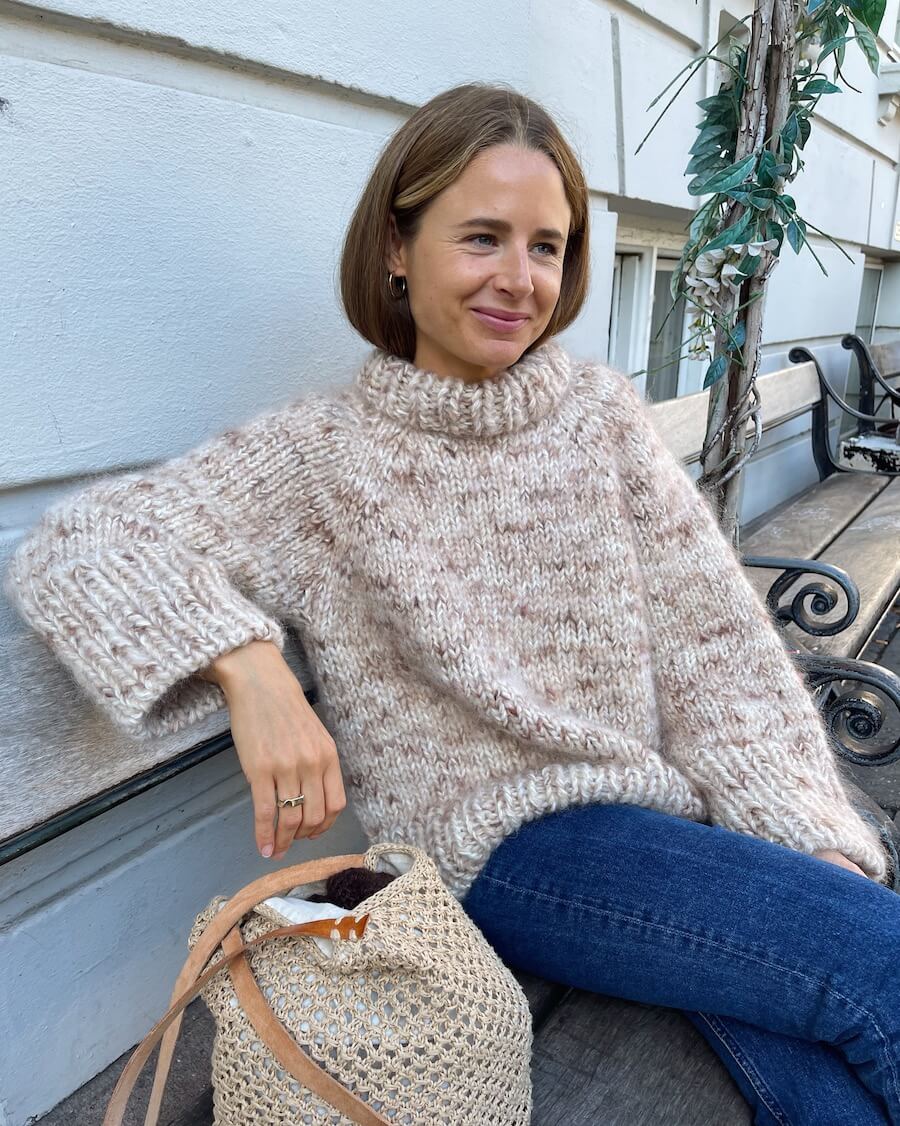
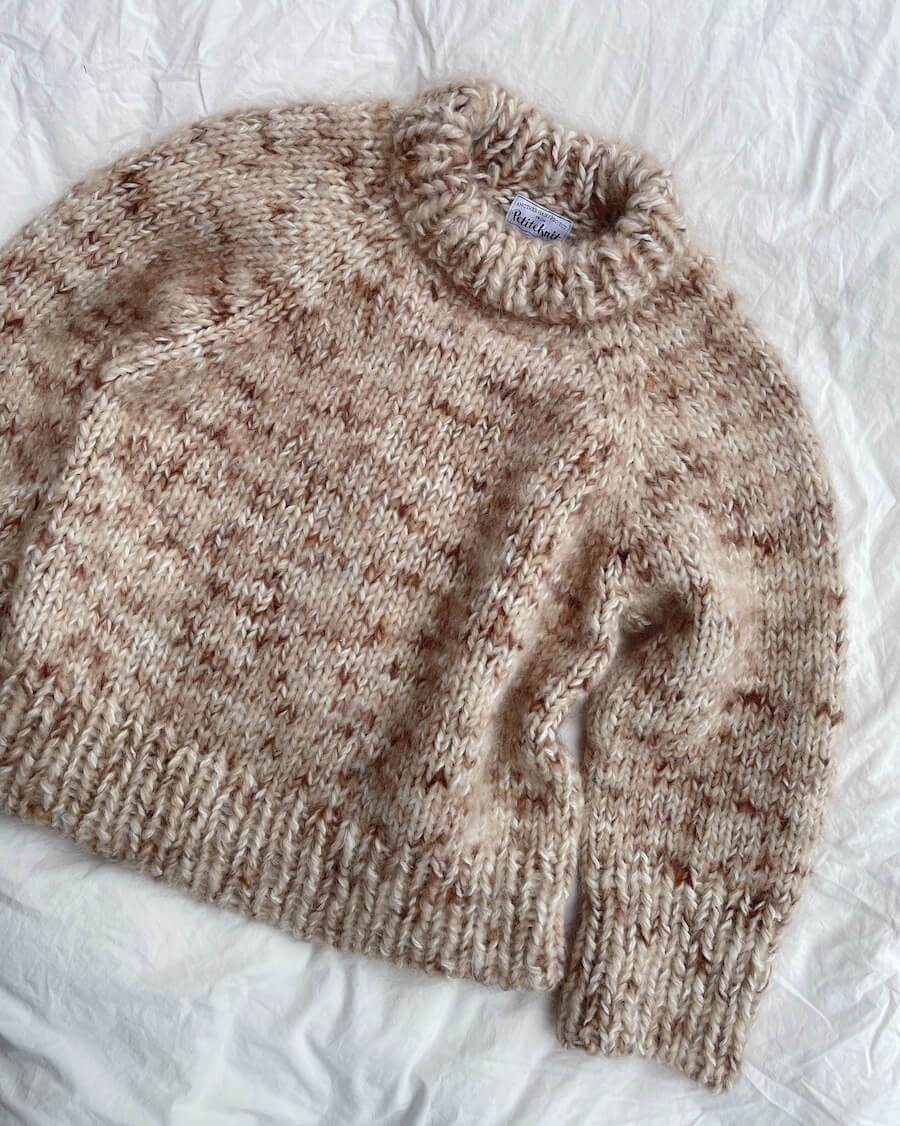
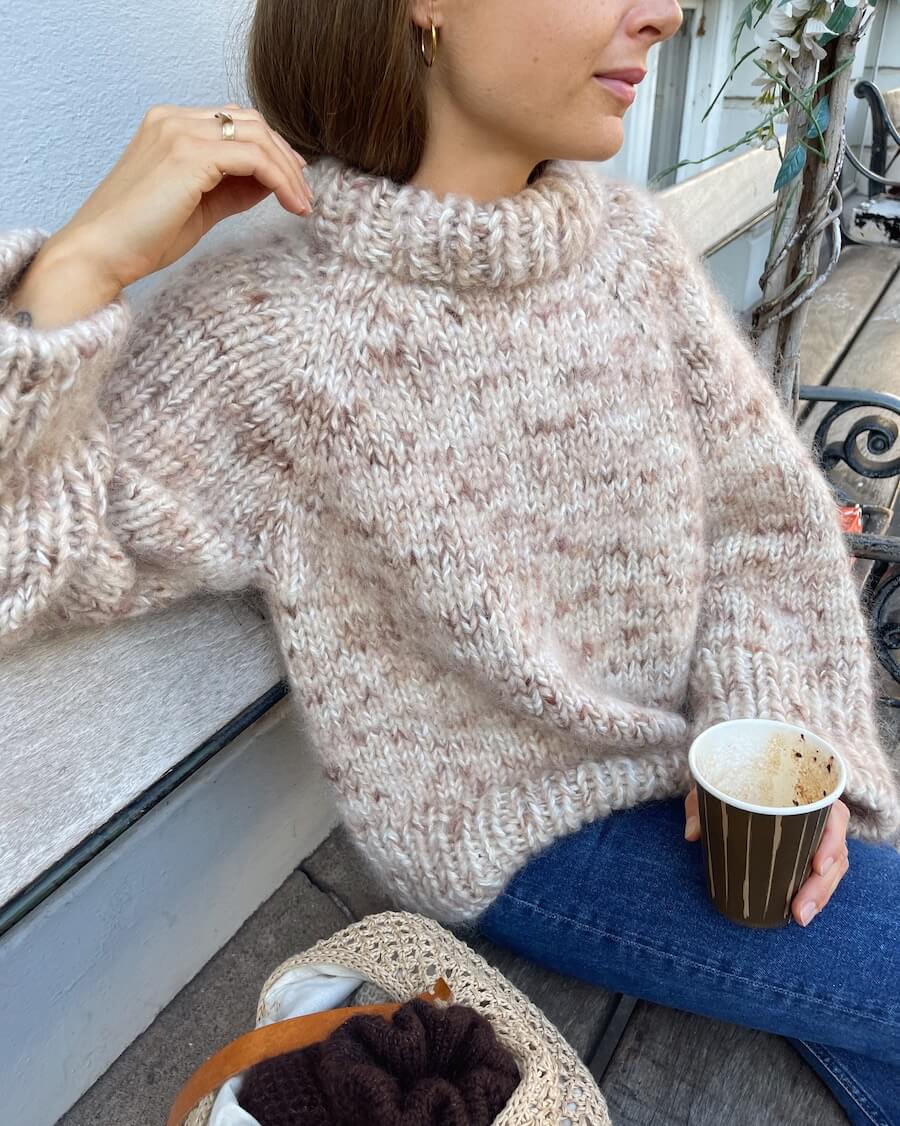
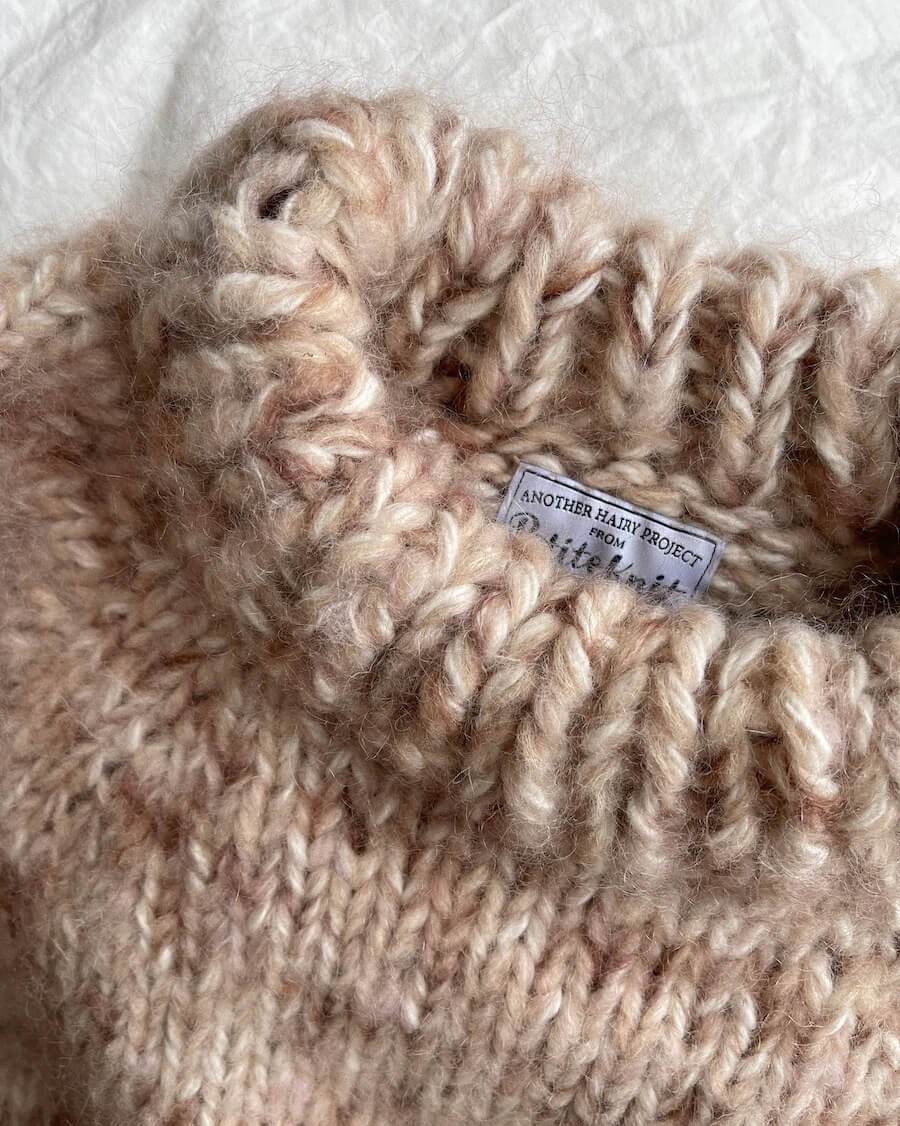
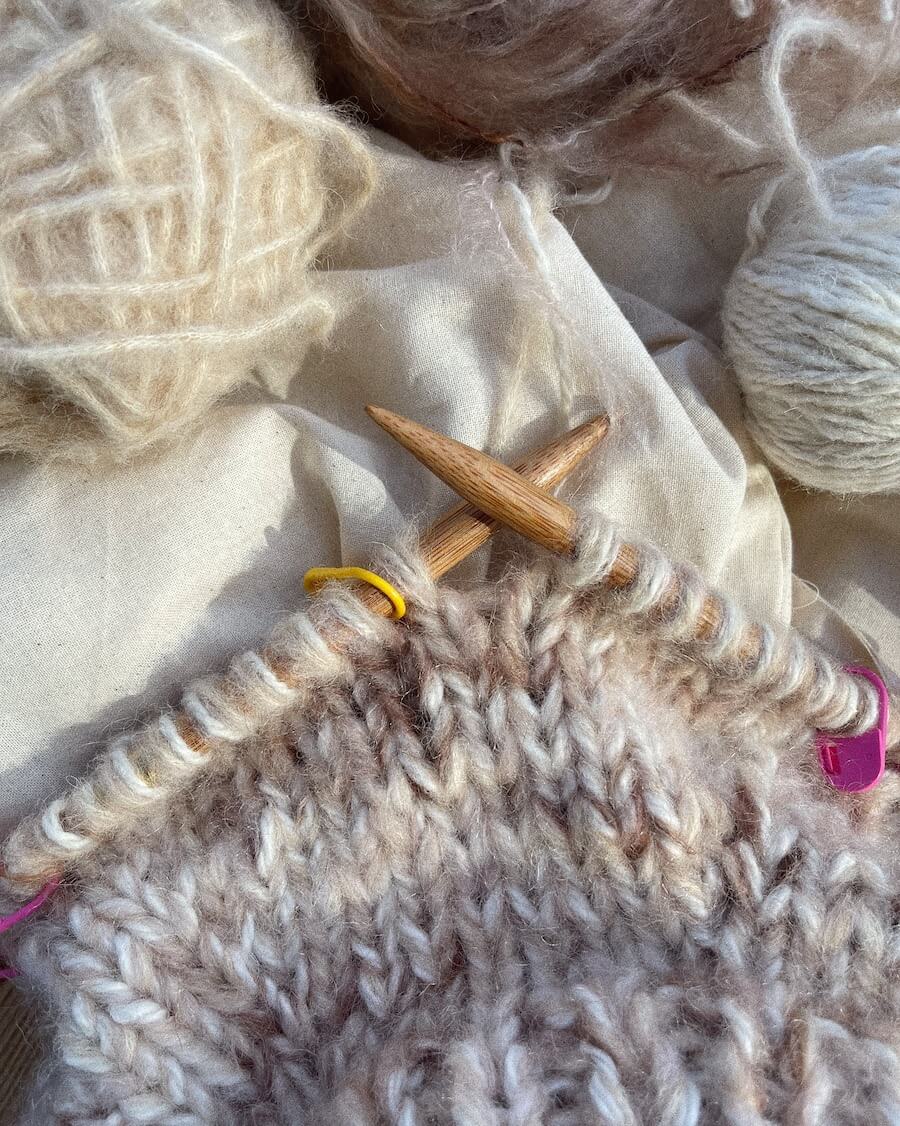
Marble Sweater is knitted from the top down with raglan increases at the yoke. The neckline is knitted down and short rows are worked in the back to shape the neckline.
Size guide
Marble Sweater should have a positive ease of approx. 20 cm relative to your bust measurement. Sizes XS (S) M (L) XL (2XL) 3XL (4XL) 5XL correspond to a bust measurement, measured on the body, of 80-85 (85-90) 90-95 (95-100) 100-110 (110-120) 120-130 (130-140) 140-150 cm. The measurements of the finished sweater are given on the front of the pattern (note that these measurements only apply if the gauge is maintained). Measure yourself before you start knitting to determine which size will fit you best. If you, for example, measure 90 cm around the bust (or the widest part of your body), you should knit a size S. A sweater in size S has a width of 109 cm and will give a positive ease of 19 cm in the example above.
Sizes: XS (S) M (L) XL (2XL) 3XL (4XL) 5XL
Sweater width: 107 (109) 113 (118) 129 (138) 149 (158) 167 cm
Length: 57 (58) 63 (65) 67 (70) 73 (75) 78 cm (without folded neckline)
Gauge: 9 stitches x 14 rows in stockinette stitch on 10 mm needles = 10 x 10 cm
Knitting needles: 10 mm circular needles (40 and/or 80 and/or 100 cm), 10 mm double-pointed needles
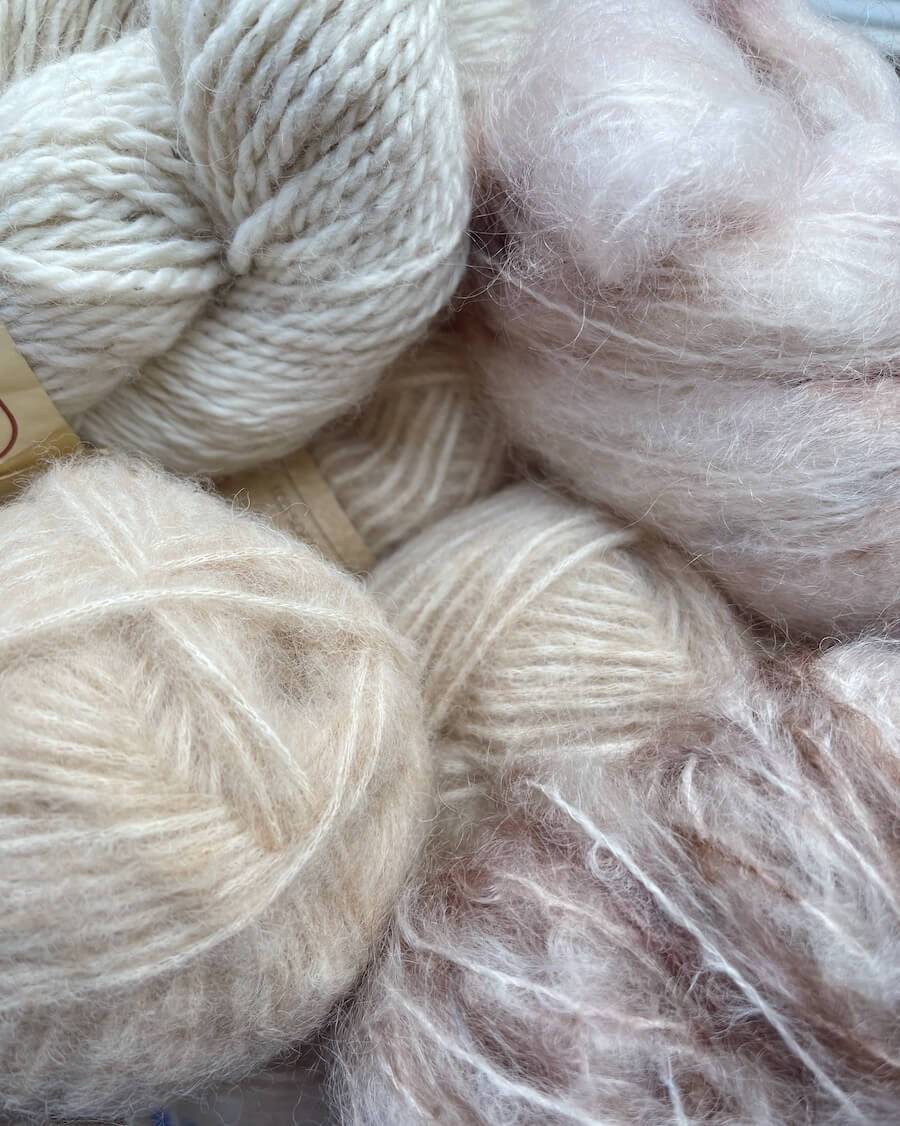
Materials: Suggestion 1: 300 (300) 300 (300-400) 400 (400) 500 (500) 600 g Fatty Mohair from Yarnie (100 g = 200 m) knitted together with 400 (400) 400 (400-500) 500 (500-600) 600 (700) 800 g Hand-spun Alpaca from Frisenvang (100 g = 110 -140 m) knitted together with 250 (250) 250 (250-300) 300 (350) 400 (400) 450-500 g Eco Soft from Isager (50 g = 125 m).
Suggestion 2: 300 (300) 300 (300-400) 400 (400) 500 (500) 600 g Fat Mohair from Sysleriget (100 g = 200 m) knitted together with 600 (600) 600-700 (700) 700-800 (800) 900 (1000) 1100 g Naturuld from Hjertegarn (100 g = 100 m)
Suggestion 3: 200 (250) 250 (250) 300 (300) 350 (350) 400 g KOS from Sandnes Garn (50 g = 150 m) together with300 (300-350) 350 (400) 400 (450) 500 (550) 600 g Alpakka Ull from Sandnes Garn (50 g = 100 m) together with 350 (350-400) 400 (400) 450 (500) 550 (600) 650 g Peer Gynt from Sandnes Garn (50 g = 91 m) together with 200 (250) 250 (250-300) 300 (350) 350-400 (400) 450 g Ballerina Chunky Mohair from Sandnes Garn (50 g = 135 m)
Difficulty: ★ ★ ★ (3 out of 5)
See the difficulty rating here.
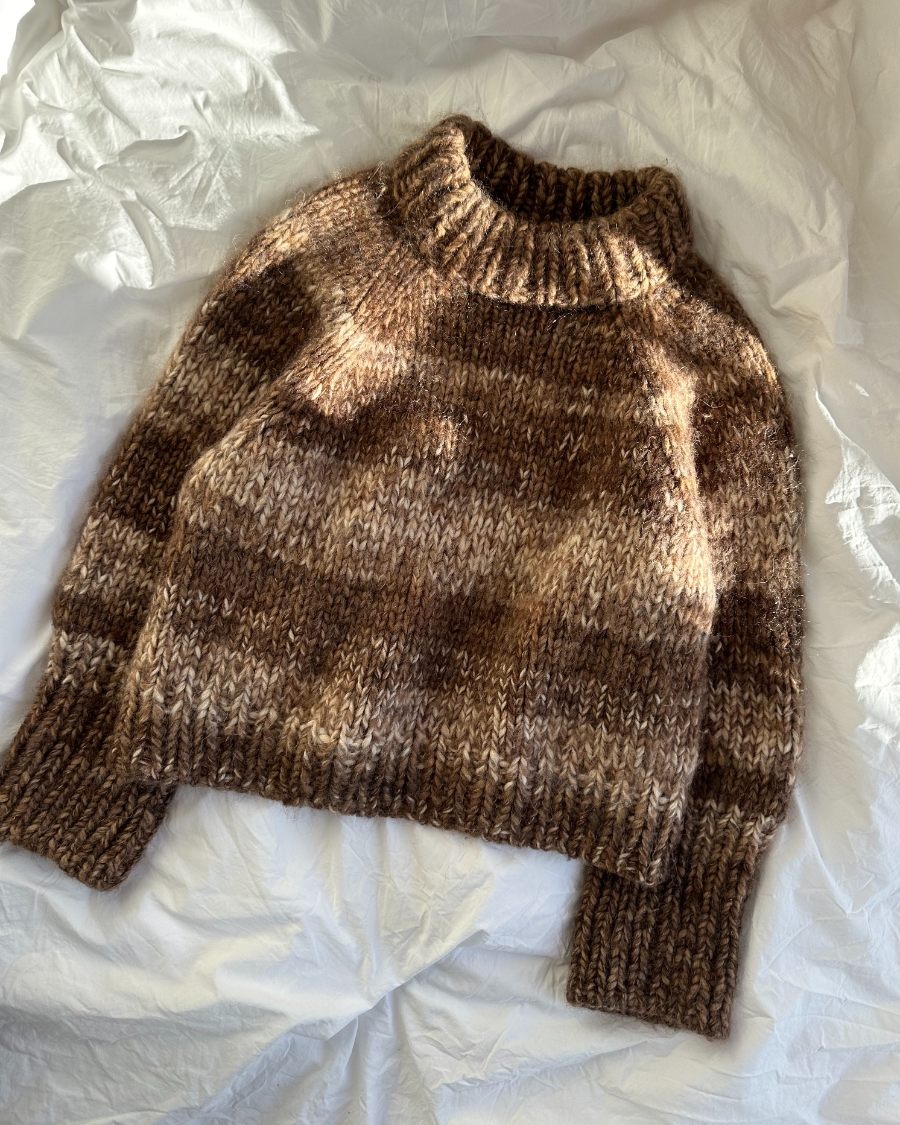
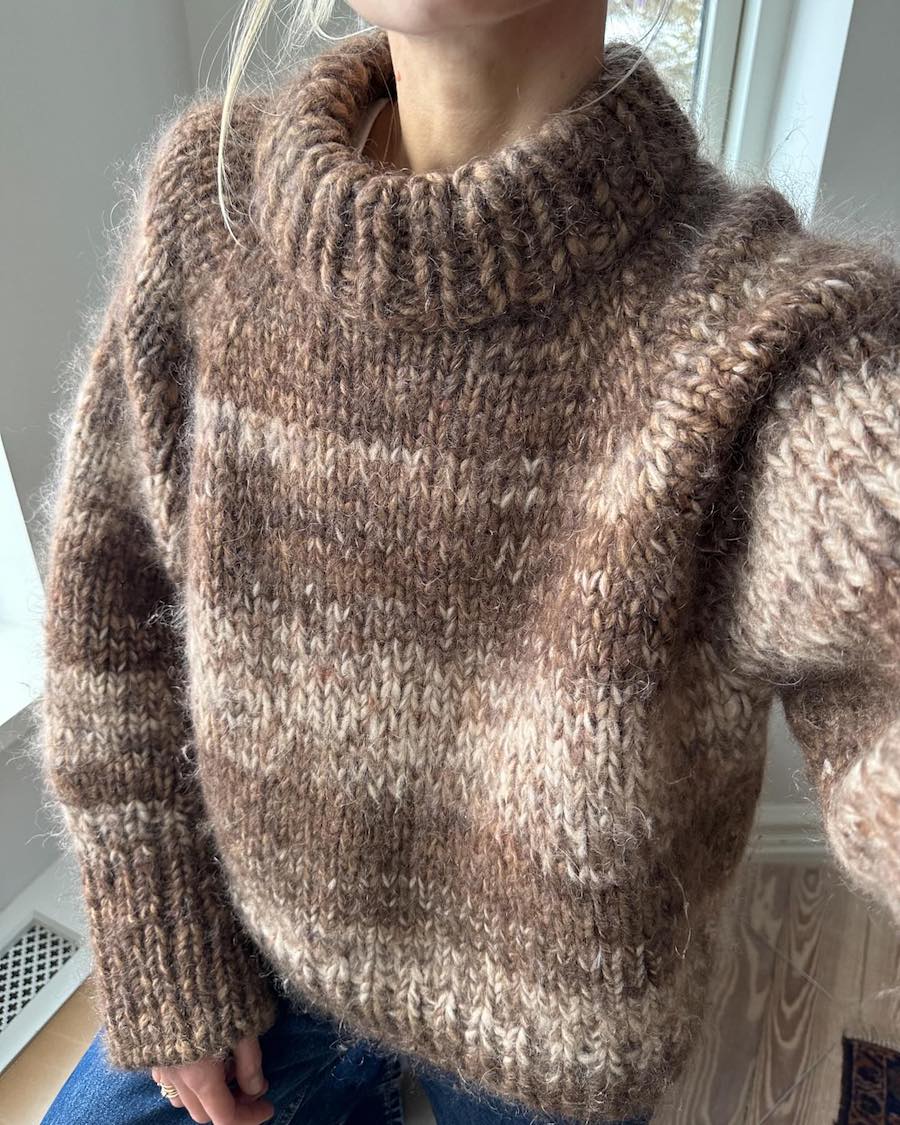
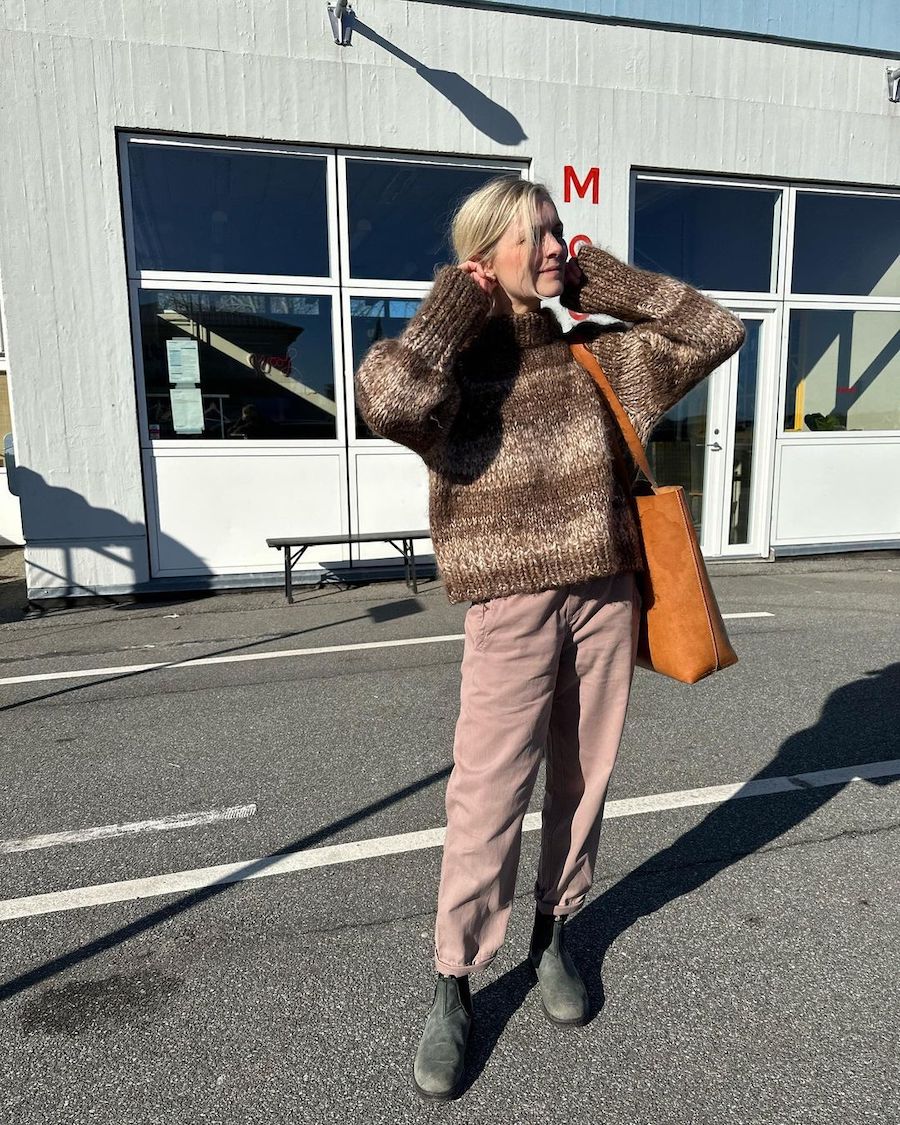
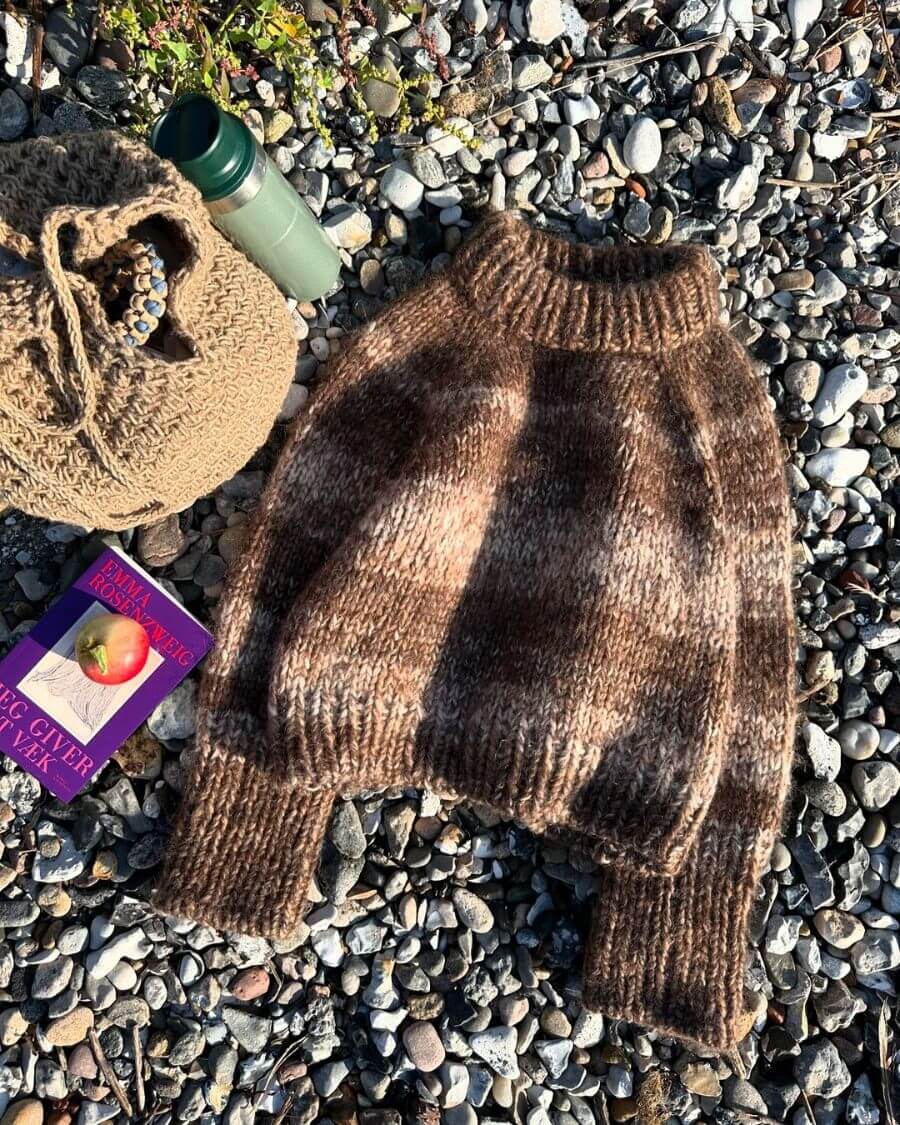
The brown Marble Sweater is knitted in Fat Mohair from Sysleriget in the color Gateau marcel together with Kos from Sandnes Garn in the colors Brunt sukker [2543] and Lys marcipan [2310] and Eco Soft from Isager in the colors 0 and 8S and Peruvian Highland Wool from Filcolana in the colors Marzipan [977] and Camel [203]. Note: This variant is knitted in remnants, and the pattern therefore contains neither yarn quantities nor a description of the color changes.
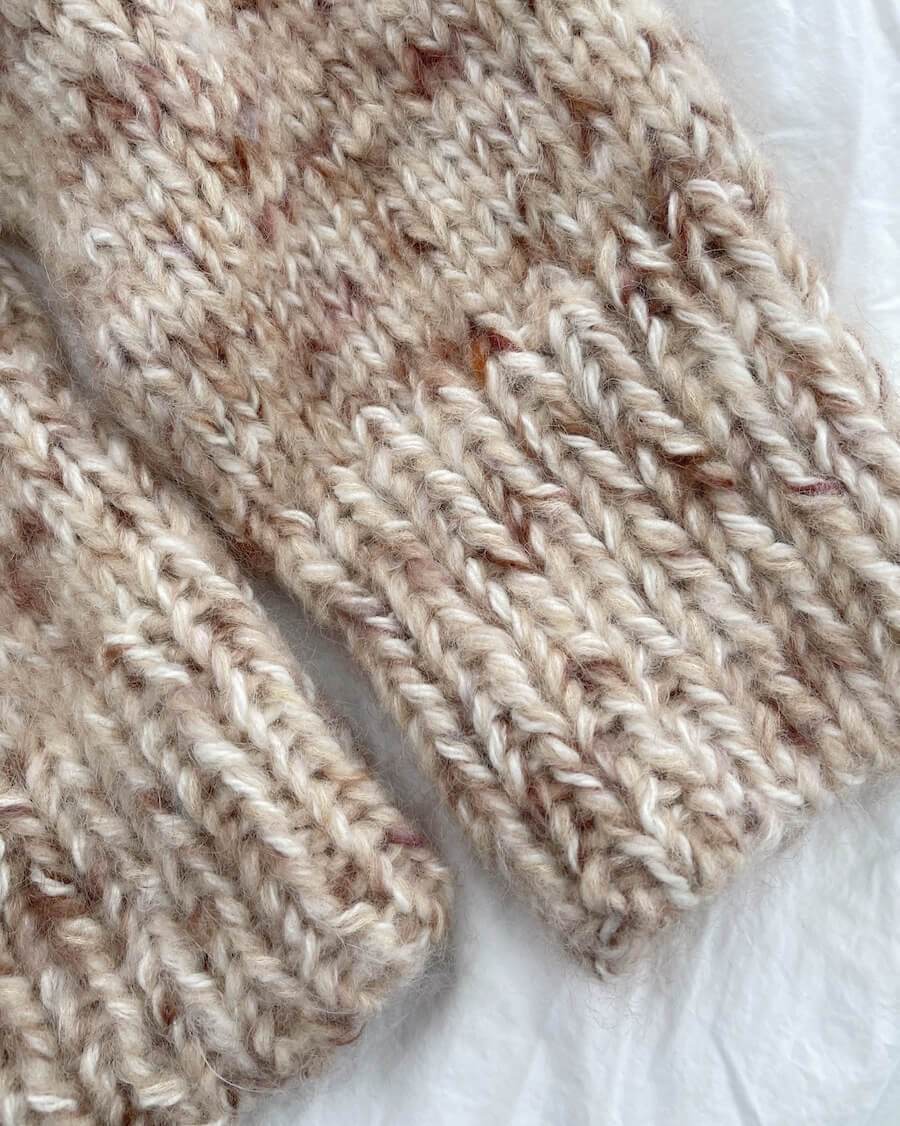
The white Marble Sweater is knitted in Kos from Sandnes Garn in the color Lys Marsipan [2310] together with Alpakka Ull from Sandnes Garn in the color Almond [2511] together with Peer Gynt from Sandnes Garn in the color Almond Tweed [2512] together with Ballerina Chunky Mohair from Sandnes Garn in the color Hvit [1012].
The white and brown Marble Sweater is knitted in Fatty Mohair from Yarnie in color 19 together with Hand-spun Alpaca from Frisenvang in the color natural off-white and Eco Soft from Isager in the color 0S.
Other yarn suggestions:
Instead of Eco Soft from Isager you can use 250 (250) 250-300 (300) 350 (350) 400 (450) 500 g Double Soft Merino from Knitting for Olive (50 g = 125 m) or 300 (300) 300 (350) 350 (400) 450 (450-500) 550 g Snefnug from CaMaRose (50 g = 110 m) or 200 (200) 250 (250) 250-300 (300) 350 (350) 400 g Kos from Sandnes Garn (50 g = 150 m)
Instead of Håndspundet Alpaka fra Frisenvang you can use 300 (300) 350 (350) 350-400 (400) 450 (500) 500 g Alpakka Ull from Sandnes Garn (50 g = 100 m)
300 (300) 300 (300-400) 400 (400) 500 (500) 600 g Fed Mohair from Siestoe Fibres (100 g = 200 m) knitted together with 600 (600) 600 (700) 700 (900) 900 (1000) 1200 g Chunky Baby from Siestoe Fibres (100 g = 100 m) and 200 (200) 200 (200) 200 (300) 300 (300) 400 g Børstet Alpakka from Siestoe Fibres (100 g = 400 m)